How to Get That Bakery-Style Crackly Top on Brownies [ FAQ’s]
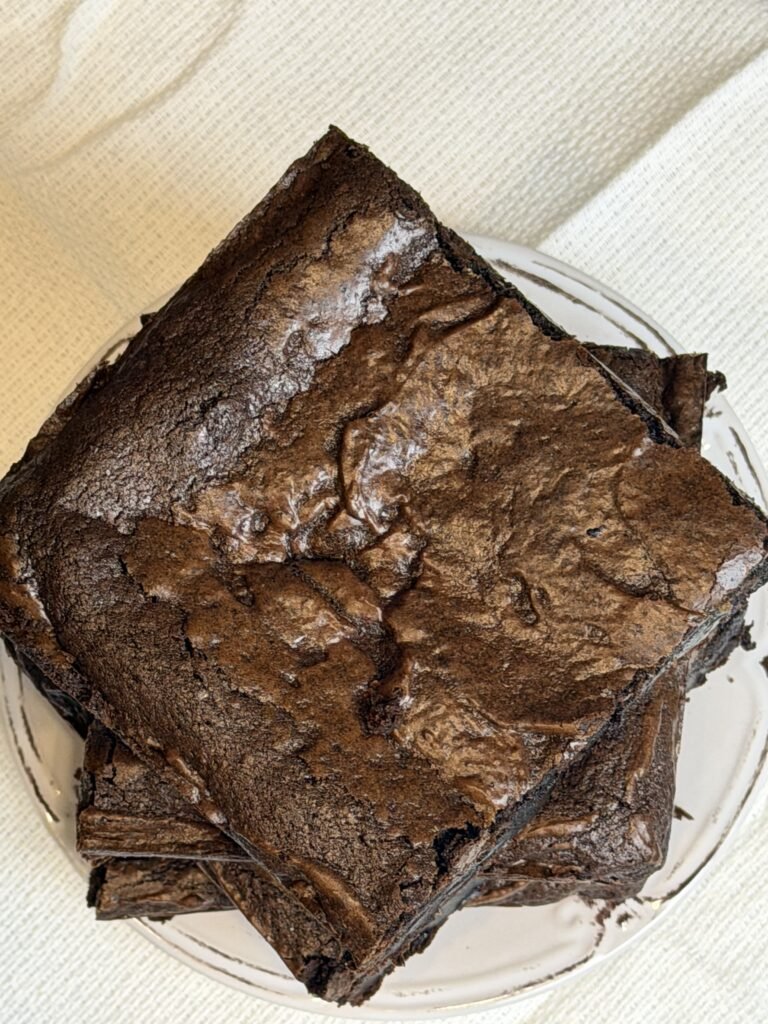
The Secret Behind Shiny, Crinkly Brownie Tops
There’s something instantly recognizable about a really good brownie.
Before you even take a bite, you see it:
that thin, shiny, crackly top sitting over a rich, fudgy center.
That delicate crinkle isn’t just for looks, it’s one of the biggest signs of a well made brownie. And if you’ve ever wondered why bakery brownies have that signature glossy top while homemade ones sometimes look dull or cakey, the answer comes down to technique.
At First Bite Cookie, I’ve learned that brownie texture is all about understanding how sugar, eggs, and chocolate work together. Once you know what creates that crackly top, it becomes much easier to achieve consistently.
Q1: Why do my brownies not have a crackly top?
A: The most common reason is that your sugar wasn’t fully dissolved into the eggs. Whisk your eggs and sugar together for 5-10 minutes until pale and thick before adding other ingredients. Also, use granulated white sugar instead of brown sugar.
Q2: Does brown sugar create a crackly top?
A: No. Brown sugar contains molasses, which adds moisture. This extra moisture prevents the surface from drying out enough for a crisp, crackly crust to form. Use granulated white sugar for the best results.
Q3: How long should I whisk eggs and sugar for crackly top brownies?
A: Whisk for 5-10 minutes until the mixture is pale, thick, and flows in ribbons when you lift the whisk. Some professional recipes recommend whisking for 8-10 minutes with a stand mixer.
Q4: Why don’t box brownie mixes always have a crackly top?
A: Box mixes often contain corn syrup and other ingredients that add moisture, which can interfere with crust formation. To improve box mix results, whisk the eggs and sugar together first before adding the mix.
Q5: Does the type of cocoa powder affect the crackly top?
A: Yes. Dutch-processed cocoa powder works best because it’s been alkalized, resulting in a darker color and smoother flavor. It also helps create a more stable batter for that beautiful crust.
Q6: Why did my crackly top disappear after cooling?
A: If your crust was there when the brownies came out of the oven but disappeared as they cooled, you may have over baked them. The crust needs a slightly underbaked, moist interior to contrast with the crisp top. Reduce your bake time by 5-7 minutes.
Q7: Can I get a crackly top with oil instead of butter?
A: Yes, but butter works better. Butter contains milk solids that help with browning and crust formation. If using oil, make sure to whisk the eggs and sugar thoroughly and use a metal pan.
Q8: Why are my brownies shiny but not crackly?
A: Shiny but un-crackled brownies usually mean the sugar dissolved but there wasn’t enough air incorporated. Whisk more vigorously to create the meringue-like structure that leads to cracking.
Q9: Does the size of the pan matter?
A: Yes. An 8×8-inch metal pan is ideal. A larger pan will create thinner brownies that bake faster, which can prevent proper crust formation. A smaller pan will create thicker brownies that may need longer baking time.
Q10: Can I add chocolate chips and still get a crackly top?
A: Yes, but stir them in gently at the very end. Adding them too early or overmixing can deflate the airy batter you created. Fold in chips gently with a spatula, just until combined.
Q11: Why did my crackly top form but then sink in the middle?
A: This usually means the brownies were slightly underbaked. The center continued to settle as they cooled. For a stable crust with a gooey center, bake until the edges are set and the center just barely jiggles.
Q12: Do room temperature eggs really matter?
A: Absolutely. Cold eggs won’t emulsify as easily with sugar, and the sugar may not dissolve as well. Room temperature eggs whip more efficiently, giving you that aerated, glossy batter that leads to a crackly finish.
Q13: How do I get that shiny, paper-thin crust like a bakery?
A: The key is creating a meringue-like layer by whisking eggs and sugar until pale and thick. Then, pour the warm chocolate mixture into the egg mixture gradually while whisking. This creates the stable emulsion that bakes into that signature tissue-paper crust.
Q14: Can I use a hand whisk instead of an electric mixer?
A: Yes, but it will take more time and effort. Whisk vigorously by hand for 8-12 minutes until the mixture is pale and thick. An electric mixer or stand mixer makes the process much easier and more consistent.
Q15: What’s the best test for doneness without losing the crackly top?
A: Use the “jiggle test.” Gently shake the pan—the edges should be set, but the center should still have a slight jiggle. A toothpick inserted should come out with moist, fudgy crumbs, not wet batter. This ensures the top stays crackly while the inside remains fudgy.
The First Bite Cookie Thoughts:
That thin crackly top isn’t just about appearance.
It’s the sign of:
- Balanced ingredients
- Proper mixing
- Careful baking technique
And underneath that shiny crust?
A rich, fudgy brownie waiting for the perfect first bite, Thank you for visiting. Check these lint out ➡️The Ultimate Fudgy Chocolate Brownies. ➡️How to Get That Bakery Crackly Top on Your Brownies: 11 Secrets for a Shiny Crust