Baking Soda vs. Baking Powder in Cookies: How Each Affects Your Results:
Introduction:
You’re following a cookie recipe, and it calls for baking soda. But you only have baking powder. Or vice versa. You wonder, “Can I just swap them? They’re both leaveners, right?”
Wrong.
If you’ve ever found yourself confused about the difference between baking soda vs. baking powder in cookies, you’re not alone. This is one of the most common questions in home baking, and the answer dramatically affects your results. Using the wrong leavener—or the wrong amount—can turn your cookies from chewy and golden to flat and greasy, or from light and tender to dense and metallic-tasting.
In this comprehensive guide, we’ll break down everything you need to know about baking soda vs. baking powder in cookies: what each one is, how they work, how they affect texture, spread, browning, and flavor, and exactly when to use which one. Plus, we’ll cover what happens when you substitute one for the other (spoiler: it’s not pretty).
Let’s get leavening.
What Are Baking Soda and Baking Powder? The Basics
Before we dive into cookies, let’s understand what these two leaveners actually are.
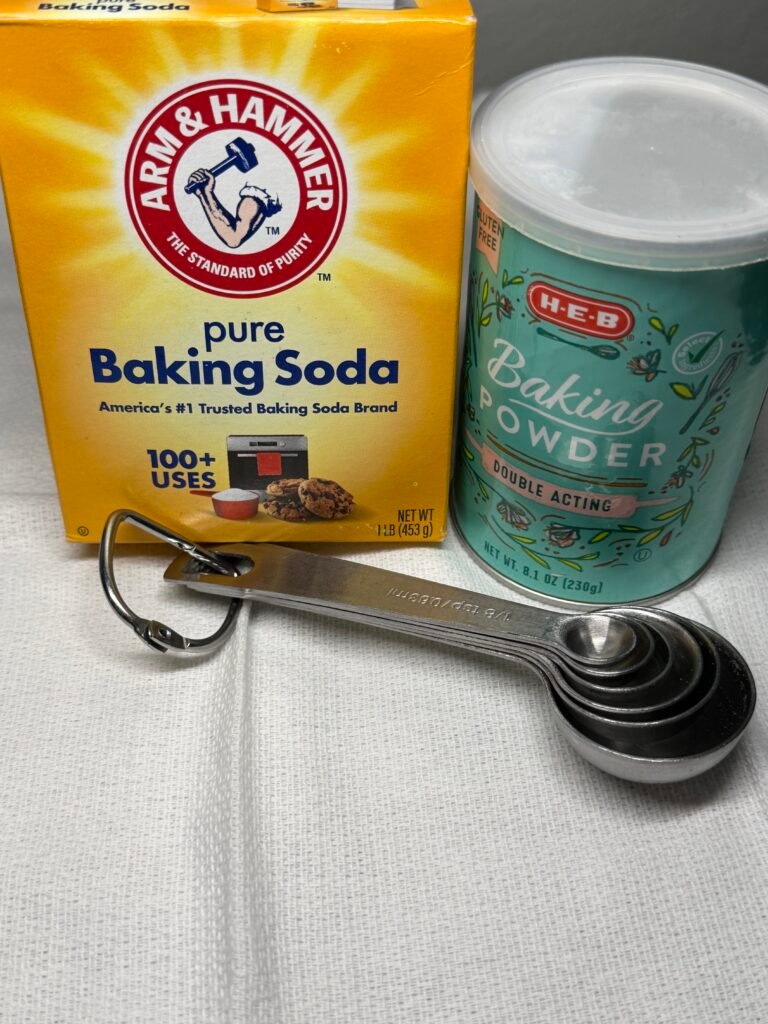
Baking Soda (Sodium Bicarbonate)
What it is: A pure chemical compound—just sodium bicarbonate. That’s it. Nothing else.
How it works: Baking soda needs two things to activate: an acid and moisture. When baking soda combines with an acidic ingredient (like buttermilk, brown sugar, yogurt, honey, molasses, or vinegar) and liquid, it immediately produces carbon dioxide gas bubbles. These bubbles expand in the oven, causing your baked goods to rise.
Key characteristics:
· Single-acting (activates immediately when mixed with acid and moisture)
· Requires an acidic ingredient in your recipe
· Creates browning and spread
· Can leave a metallic or soapy taste if not properly neutralized
Baking Powder:
What it is: A complete leavening system. Baking powder contains three ingredients: baking soda, an acid (usually cream of tartar), and a drying agent (usually cornstarch). It’s essentially self-contained baking soda with its own acid built in.
How it works: Most baking powders are “double-acting.” This means they activate in two stages:
- First activation: When mixed with wet ingredients (immediate reaction)
- Second activation: When exposed to oven heat (delayed reaction)
Key characteristics:
· Double-acting (activates twice—once when mixed, once when heated)
· Does NOT require additional acidic ingredients
· Creates rise and puffiness, not spread
· Neutral flavor (won’t taste metallic)
Baking Soda in Cookies: How It Affects Your Results
When you use baking soda in cookies, here’s exactly what happens:
Texture: Thin, Crispy, and Chewy
Baking soda promotes spread. It raises the pH of your dough, which weakens gluten structure and allows cookies to spread more during baking. The result is thinner cookies with crisp edges and chewy centers.
Best for: Thin and crispy cookies, lacy cookies, classic chocolate chip cookies, and any cookie where you want spread.
Color: Golden to Dark Brown
Baking soda encourages browning. The alkaline environment it creates speeds up the Maillard reaction, the chemical process that gives baked goods their golden-brown color. Cookies made with baking soda will have darker, more appetizing color than those made without it.
Best for: Achieving that beautiful, bakery-style golden-brown finish.
Flavor: Tangy and Complex
Baking soda neutralizes acidity. If your recipe contains acidic ingredients like brown sugar, buttermilk, or molasses, baking soda balances them out, creating a more complex, rounded flavor. However, if you use too much baking soda or lack sufficient acid, your cookies will taste metallic, soapy, or bitter.
Best for: Recipes with brown sugar, honey, molasses, buttermilk, or yogurt.
Spread: High
Cookies made with baking soda spread significantly more than those made with baking powder. The alkaline environment weakens gluten, allowing the dough to flow outward before setting.
Best for: Thin, crispy cookies or cookies with lots of add-ins that need room to spread.
Baking Powder in Cookies: How It Affects Your Results
Now let’s look at baking powder:
Texture: Thick, Puffy, and Cakey
Baking powder promotes rise, not spread. The double-acting nature creates gas bubbles that push the cookie upward rather than outward. The result is thicker, puffy, almost cake-like cookies.
Best for: Cakey cookies, sugar cookies, shortbread, and any cookie where you want minimal spread and maximum height.
Color: Pale to Light Golden
Baking powder does NOT promote browning. Without the alkaline boost of baking soda, the Maillard reaction happens more slowly. Cookies made with baking powder will be paler than those made with baking soda.
Best for: Cookies where a pale, delicate appearance is desired (like wedding cookies or certain shortbreads).
Flavor: Neutral
Unlike baking soda, baking powder won’t leave a metallic taste if you use too much. However, using too much can create a bitter or chemically flavor. But when used correctly, baking powder is virtually flavorless.
Best for: Any recipe where you want the other flavors to shine without interference.
Spread: Low to Minimal
Baking powder creates lift, not spread. Cookies made with baking powder will hold their shape during baking. What you scoop is essentially what you get.
Best for: Thick, chunky cookies, sandwich cookies, or any cookie where shape retention matters.
Using Both: When and Why to Combine Them
Many cookie recipes call for both baking soda and baking powder. Why? Because they work together to create balance.
What Happens When You Use Both
When you combine baking soda and baking powder:
· Spread vs. Rise: Baking soda promotes spread; baking powder promotes rise. Together, they create a cookie that spreads moderately (not too thin, not too puffy).
· Browning vs. Tenderness: Baking soda creates golden color; baking powder creates tender crumb. Together, you get a beautifully browned cookie that’s still tender.
· Flavor: The baking soda neutralizes acidity; the baking powder adds extra lift. Together, you get balanced flavor and ideal structure.
When Recipes Call for Both
Recipes with both leaveners typically:
· Have some acidic ingredients (like brown sugar) that need neutralizing
· Want moderate spread (not flat, not puffy)
· Aim for golden-brown color without over-browning
· Want a tender but structured crumb
Examples: Classic chocolate chip cookies, oatmeal cookies, some sugar cookies.
How Much of Each to Use
A general guideline:
Desired Result Baking Soda-Baking Powder
Thin, crispy cookies 1 tsp 0
Balanced (chewy edges, tender centers) ½ tsp ½ tsp
Thick, puffy, cakey cookies 0 1-2 tsp
How to Substitute One for the Other
Sometimes you’re out of one. Here’s what to do:
Substituting Baking Powder for Baking Soda
Can you? Yes, but it’s not a direct swap and you’ll get different results.
The formula: Replace 1 teaspoon baking soda with 2-3 teaspoons baking powder.
Why: Baking powder is less concentrated than baking soda. You need about 2-3 times as much to achieve similar leavening power.
What changes: Your cookies will be:
· Less brown (paler)
· More puffy and cakey
· Less spread (thicker)
The catch: Baking powder already contains acid. If your original recipe had acidic ingredients (like brown sugar), you may need to adjust.
Final Thoughts: Choose Your Leavener Wisely
If you’re still confused about baking soda vs. baking powder in cookies, remember this: Baking soda = thin, crispy, brown. Baking powder = thick, puffy, pale. Choose based on the cookie texture you want.
Understanding the difference between these two leaveners transforms you from a recipe-follower into a confident, intentional baker. You’ll look at a recipe and know why it calls for baking soda or baking powder and what would happen if you swapped them.
So the next time you’re baking cookies, take a moment to appreciate the tiny white powder doing the heavy lifting. It may be invisible in the final cookie, but its absence (or misuse) would be impossible to miss.
Now go bake something perfectly leavened! Also check these links out… ➡️Award-Winning Chocolate Chip Cookie ➡️Award-Winning Oatmeal Raisin Cookies…➡️Why Didn’t Your Cookies Spread? 12 Causes and Solutions for Perfect Cookie Spread