Baking Soda vs. Baking Powder [FAQ’s]
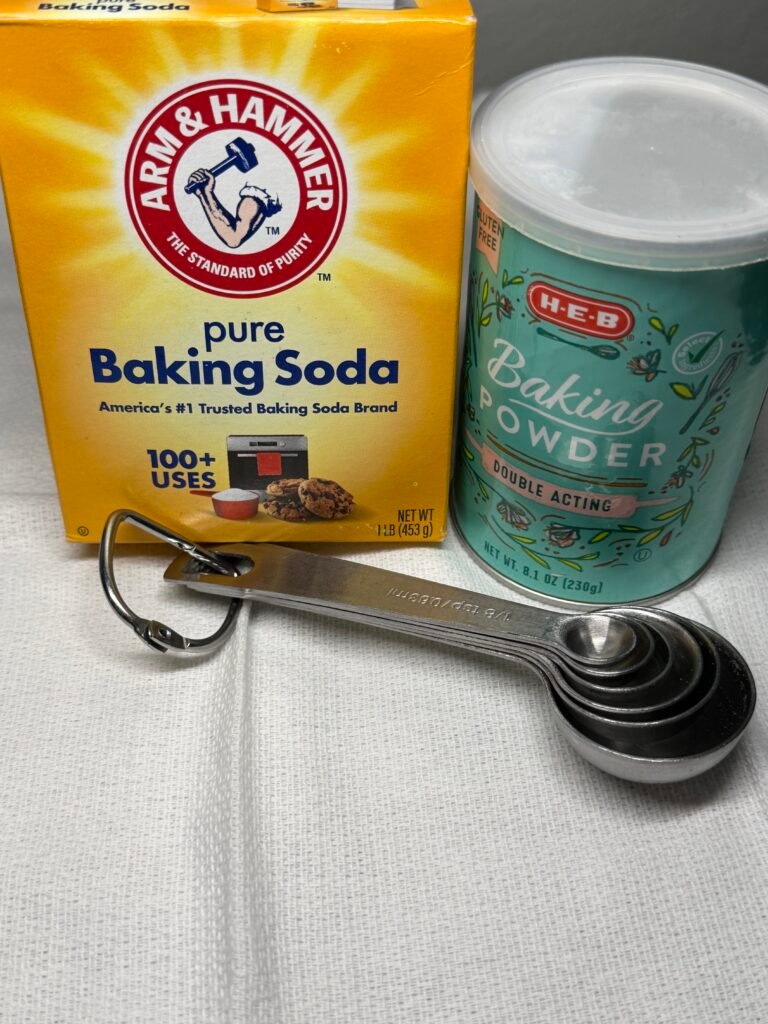
Have you ever followed a cookie recipe exactly and still wondered why your cookies didn’t turn out the way you expected?
For instance, they spread too much.
Maybe they stayed thick.
Maybe they didn’t brown properly.
Or maybe they lacked that soft, chewy texture you were hoping for.
Sometimes the answer comes down to two small ingredients hiding in your pantry:
Baking soda and baking powder.
While they may look similar, they perform very different jobs in cookie baking. Understanding how each one works can completely change the texture, spread, flavor, and appearance of your cookies.
At First Bite, I’ve learned that some of the biggest differences in baking often come from the smallest ingredients.
Let’s break it down with these FAQ’s.
Understanding the Science Behind Better Cookies.
Q1: What’s the main difference between baking soda and baking powder in cookies?
A: Baking soda creates thin, crispy, well-browned cookies and requires an acidic ingredient to activate. Baking powder creates thick, puffy, cakey cookies with pale color and works on its own. Baking soda promotes spread; baking powder promotes rise.
Q2: Can I use baking powder instead of baking soda in cookies?
A: Yes, but you’ll need 2-3 times as much baking powder (1 tsp baking soda = 2-3 tsp baking powder). Your cookies will be paler, puffier, and cakey rather than thin and crispy. For best results, use the leavener your recipe calls for.
Q3: Can I use baking soda instead of baking powder in cookies?
A: Yes, but you must add an acid to activate it. Replace 1 tsp baking powder with ¼ tsp baking soda plus ½ tsp cream of tartar or 1 tsp lemon juice. Without enough acid, your cookies will taste metallic and bitter.
Q4: Why do some cookie recipes use both baking soda and baking powder?
A: Using both creates balanced results. Baking soda provides spread and browning; baking powder provides lift and tenderness. Together, they produce cookies with moderate spread, golden color, and a tender but structured crumb.
Q5: How does baking soda affect cookie texture?
A: Baking soda promotes spread by raising the dough’s pH, which weakens gluten. The result is thinner, crispier cookies with chewy centers and darker, more golden-brown color.
Q6: How does baking powder affect cookie texture?
A: Baking powder promotes rise by creating gas bubbles that push the cookie upward. The result is thicker, puffier, cakey cookies with paler color and a tender, delicate crumb.
Q7: What happens if I use too much baking soda?
A: Too much baking soda will make your cookies spread excessively (flat and greasy), over-brown (dark edges), and taste metallic, soapy, or bitter. The excess alkaline also affects texture, making cookies crumbly and unpleasant.
Q8: What happens if I use too much baking powder?
A: Too much baking powder will make your cookies rise too quickly, then collapse, creating a dense, coarse, crumbly texture. They may also taste bitter or chemically and can develop large, unsightly air pockets.
Q9: How can I tell if my baking soda is still good?
A: Drop a small amount of baking soda into vinegar or lemon juice. It should fizz and bubble immediately and vigorously. If there’s little or no reaction, it’s time to replace it.
Q10: How can I tell if my baking powder is still good?
A: Drop a small amount of baking powder into hot water. It should bubble and fizz immediately. If there’s little or no reaction, or if the reaction is weak, replace it. Baking powder typically lasts 6-12 months.
Q11: Why do my cookies taste metallic?
A: A metallic taste is a classic sign of too much baking soda or not enough acid to neutralize it. Reduce the baking soda by ¼ teaspoon or add more acidic ingredients like brown sugar, molasses, or buttermilk.
Q12: Can I omit baking soda or baking powder entirely?
A: You can, but your cookies will be dense, flat, and hard. Leavening agents create the gas bubbles that give cookies their lift and texture. Without them, you’ll have something closer to a shortbread or biscuit.
Q13: Does brown sugar activate baking soda?
A: Yes. Brown sugar contains molasses, which is acidic. When combined with baking soda and moisture, brown sugar provides the acid needed to activate the baking soda, creating carbon dioxide gas.
Q14: Which leavener is better for chocolate chip cookies?
A: Classic chocolate chip cookies typically use baking soda. The baking soda creates spread, browning, and that signature chewy texture. It also pairs perfectly with brown sugar’s acidity. Some recipes add a small amount of baking powder for extra lift.
Q15: Which leavener is better for sugar cookies?
A: Sugar cookies vary. Roll-out sugar cookies often use baking powder for lift and minimal spread (to maintain shape). Soft, cakey drop sugar cookies use baking powder. Crispy sugar cookies may use baking soda. Check your specific recipe. Check these links out ➡️ Baking Soda vs. Baking Powder in Cookies: How Each Affects Your Results: ➡️ Award-Winning Oatmeal Raisin Cookies
The First Bite.
One of the best things about baking is discovering how tiny ingredients can create huge differences.
A teaspoon of baking soda can change spread.
A teaspoon of baking powder can change texture.
Understanding those differences gives you more control over every batch you bake.
And when you understand the science behind your ingredients…
You stop guessing.
And start baking with confidence.